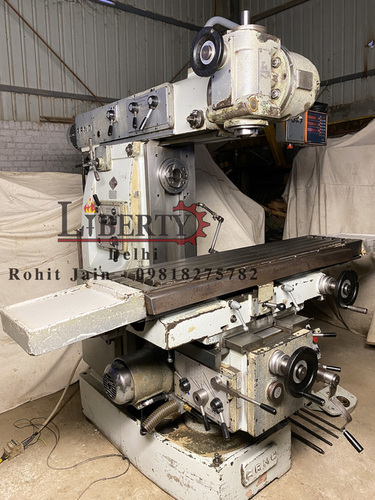
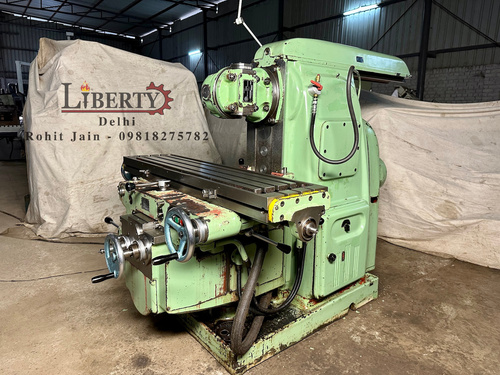
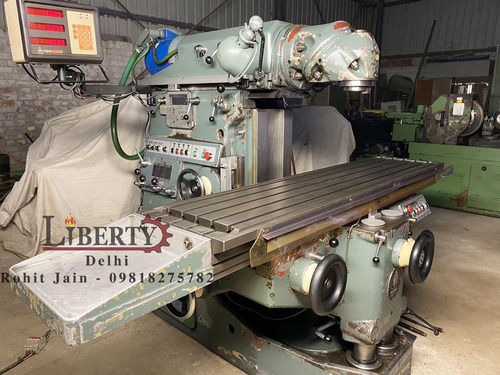
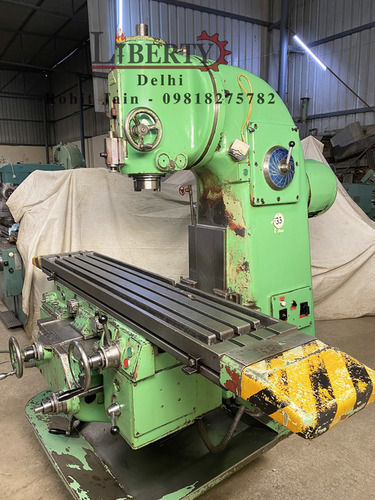
About Arno Nomo Double Spindle Milling Machine
Make - Arno-Nomo (Italy)
Table Size - 1550 mm x 350 mm
XYZ Travel - 1100 mm x 325 mm x 425 mm
Horizontal Spindle Speeds - 40 rpm to 1700 rpm
Horizontal Spindle Taper - ISO 50
Vertical Spindle Speeds - 25 rpm to 1500 rpm
Vertical Spindle Taper - ISO 40
Table Travel Feed Rate - 10 mm/min to 880 mm/min
Over-Arm Horizontal Travel - 700 mm
- Double Swivel type Vertical Milling Head.
- Spindle Travel in Vertical Milling Head.
- Rotating type Table.
- Machine is in excellent working condition.
Video of The Machine-
https://youtu.be/59BrrLPdlVE
Engineered for Simultaneous Heavy MillingEquipped with dual spindles (ISO 40 taper) and separate drive motors, the Arno Nomo Double Spindle Milling Machine delivers exceptional throughput and accuracy in batch production. Its box-type slide ways and heavy-duty table provide stability even during intense operations.
Integrated Manual and Precision ControlsThe machine integrates manual lever and dial feed controls, complemented by fine micrometer adjustment and rapid traverse capability (up to 2500 mm/min). These features enable operators to achieve accurate cuts and adaptable feed rates, supporting both high productivity and custom milling tasks.
Reliable Cooling and Lubrication SystemsTo prevent overheating and ensure operational longevity, the milling machine incorporates a centralized automatic lubrication system and an integrated coolant pump. These systems reduce maintenance intervention and help maintain consistent machine performance.
FAQs of Arno Nomo Double Spindle Milling Machine:
Q: How does the double spindle configuration benefit production processes?
A: The double spindle design enables simultaneous milling on two workpieces or multiple surfaces, significantly increasing throughput and efficiency. This setup is ideal for high-volume batch production, reducing machining time per part and streamlining workflows.
Q: What types of operations and materials is this machine best suited for?
A: The Arno Nomo Double Spindle Milling Machine excels at heavy-duty milling operations, processing tough materials such as cast iron and alloy steel. Its high rigidity and separate spindle control make it especially suitable for industries requiring reliable, repeatable results in demanding applications.
Q: When is manual micrometer adjustment used during machining?
A: Manual micrometer adjustment is employed when precise feed and incremental positioning are required. This feature is particularly beneficial for finishing stages or achieving specific dimensions, complementing the main manual or rapid traverse controls.
Q: Where is this milling machine typically installed?
A: Due to its size, weight (approx. 2600 kg), and need for 415 V, 3-phase power, the machine is commonly installed in industrial workshops or production facilities with adequate floor space (2400 mm x 1700 mm) and lifting equipment for placement.
Q: What is the process for integrating this machine into a production line?
A: Integration involves positioning the machine in the designated area, connecting it to the facilitys power and coolant supplies, and calibrating the manual controls. Operators should be trained on its specific manual controls and safety guidelines before commencing production.
Q: How is the lubrication and cooling managed during operation?
A: The milling machine features a centralized automatic lubrication system that continuously distributes oil to critical components, while the integrated coolant pump maintains optimal cutting temperatures, minimizing manual maintenance requirements.
Q: What advantages does manual feed and clamping provide over CNC controls?
A: Manual feed and clamping offer reliable, direct operator control, facilitating quick setups, easy adjustments, and straightforward maintenance. For certain batch productions or single part runs, this conventional system can be more flexible and cost-effective compared to full CNC integration.








 Send Inquiry

 Send Inquiry
 Send Inquiry
 Send SMS


