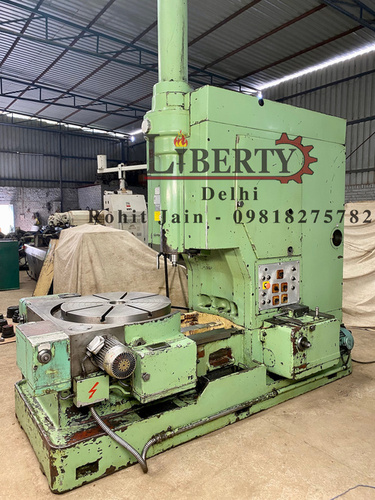
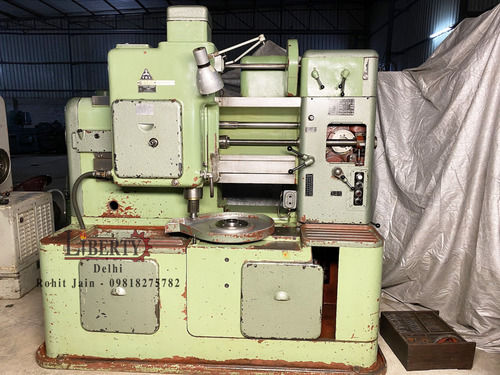
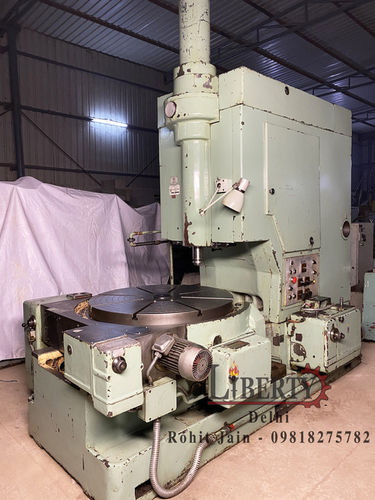
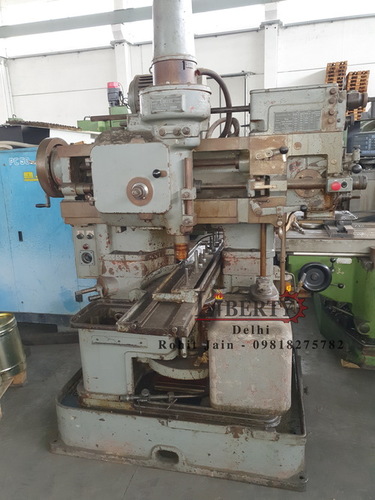
About Stanko 5B150 Gear Shaper Machine
Make - Stanko (Russia)
Model - 5B150
Max. Module - 12 module
Length of Stroke - 200 mm
Max. Diameter of Gear - 800 mm
Table Diameter - 800 mm
Distance from Cutter-axis to the Table-axis - 0 mm to 630 mm
Stroke Rates - 33 strokes/min to 188 strokes/min
Table Bore Diameter - 120 mm
Weight of the Machine - 10.2 tons (approximately)
- Motorised Rapid Travels in Spindle Rotation, Table Rotation, & Table Travel.
- Feed Movements can be on Table Rotation and also on Table Longitudinal Travel.
- Complete with Change Gears, Operating Manual & Electrical Drawings.
- Machine is in excellent working condition.
Video of The Machine -
https://youtu.be/fKyu06dMSfk
Exceptional Gear Shaping CapacityThe Stanko 5B150 is engineered for processing large and heavy workpieces, with support for diameters up to 1500 mm and weights up to 4000 kg. Its robust design and heavy-duty construction guarantee reliability and stability during high-precision gear cutting operations, making it suitable for demanding industrial applications where accuracy and durability are crucial.
Versatile Gear ProductionThis machine is capable of shaping a wide variety of gears, including spur, helical, and spline gears. Its adjustable cutting stroke and variable ram speeds allow for precise customization according to the specific requirements of each gear project. The inclusion of a 200 mm shaper cutter and manual control offers users flexibility and consistent results for different production needs.
Efficient Operation and MaintenanceThe 5B150 features an integrated coolant system, reducing heat and wear during operation, and extending tool life. Its ergonomic layout and manual controls ensure straightforward use and maintenance. With a reputable legacy as a Russian-manufactured gear shaper, this model meets the demands of manufacturers, exporters, and repair shops looking for sturdy, long-lasting equipment.
FAQs of Stanko 5B150 Gear Shaper Machine:
Q: How does the Stanko 5B150 Gear Shaper Machine operate to shape different gears?
A: The Stanko 5B150 Gear Shaper Machine uses a reciprocating ram and adjustable stroke mechanism to cut precise gear teeth onto workpieces. With manual controls and variable stroke speeds (16125 strokes per minute), operators can effectively shape spur, helical, and spline gears by adjusting feed rates and cutter positioning, ensuring accurate results for diverse specifications.
Q: What types of workpieces and gears can this machine handle?
A: This gear shaper can work on a broad range of workpieces, including those up to 1500 mm in diameter, 500 mm in height, and weighing up to 4000 kg. It is suitable for producing spur, helical, and spline gears, making it highly versatile for different manufacturing scenarios.
Q: When is it beneficial to use the Stanko 5B150 Gear Shaper in a production process?
A: The 5B150 is especially beneficial for medium to heavy gear manufacturing projects requiring high precision and handling of large, heavy components. Its heavy-duty construction and reliable performance make it ideal for both batch production and one-off projects involving specialized or oversized gears.
Q: Where is the Stanko 5B150 typically utilized in industry?
A: This machine is commonly found in industrial gear manufacturing plants, heavy engineering workshops, repair facilities, and companies that require efficient production or refurbishment of large gears for equipment such as machinery, vehicles, or industrial drive systems.
Q: What is the process for maintaining the Stanko 5B150 Gear Shaper to ensure optimal performance?
A: Regular maintenance involves cleaning and lubricating moving parts, checking alignment of the cutter and ram, monitoring the coolant system, and ensuring proper electrical connections. Periodic inspections and servicing help maintain accuracy and extend the machines operational life.
Q: How do operators benefit from using this model of gear shaper?
A: Operators benefit from its user-friendly manual controls, consistent precision, and heavy-duty design. The integrated coolant system reduces downtime due to overheating or tool wear, while the machines robust build allows for reliable, efficient operation even with demanding workload requirements.








 Send Inquiry

 Send Inquiry
 Send Inquiry
 Send SMS


