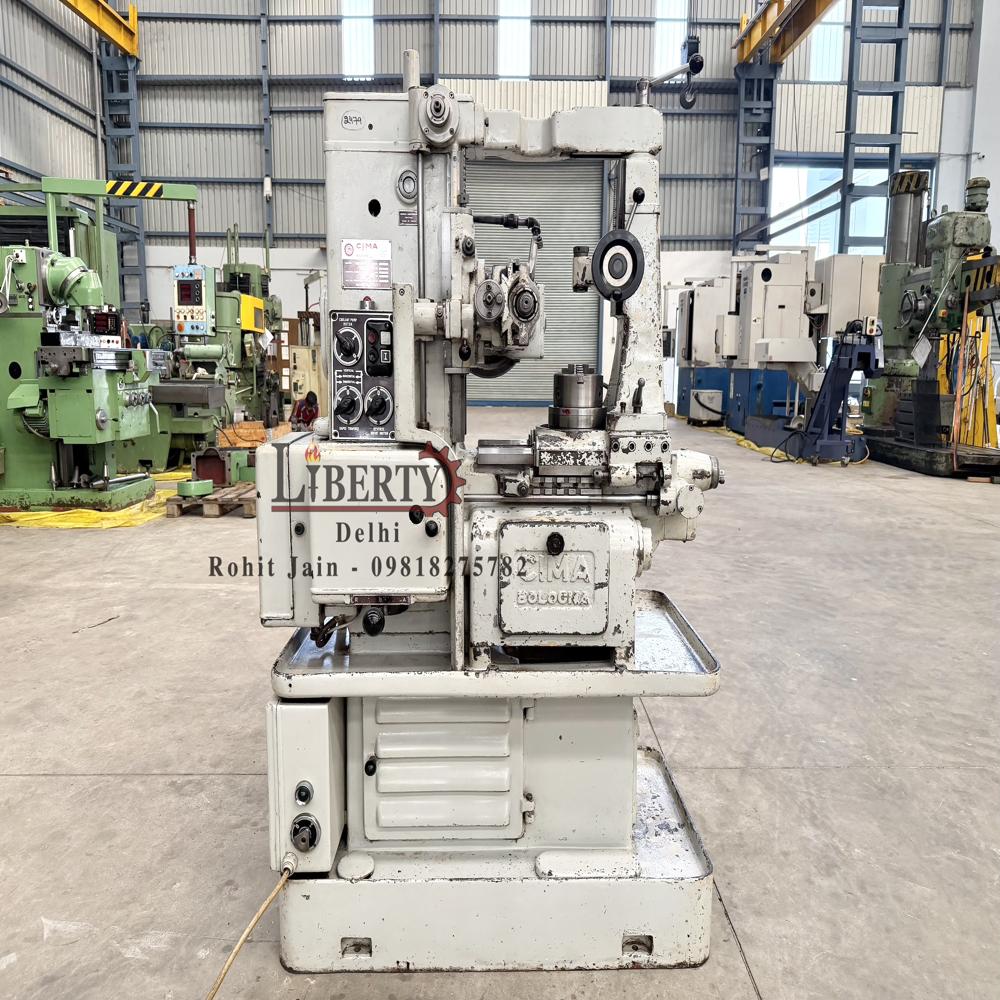
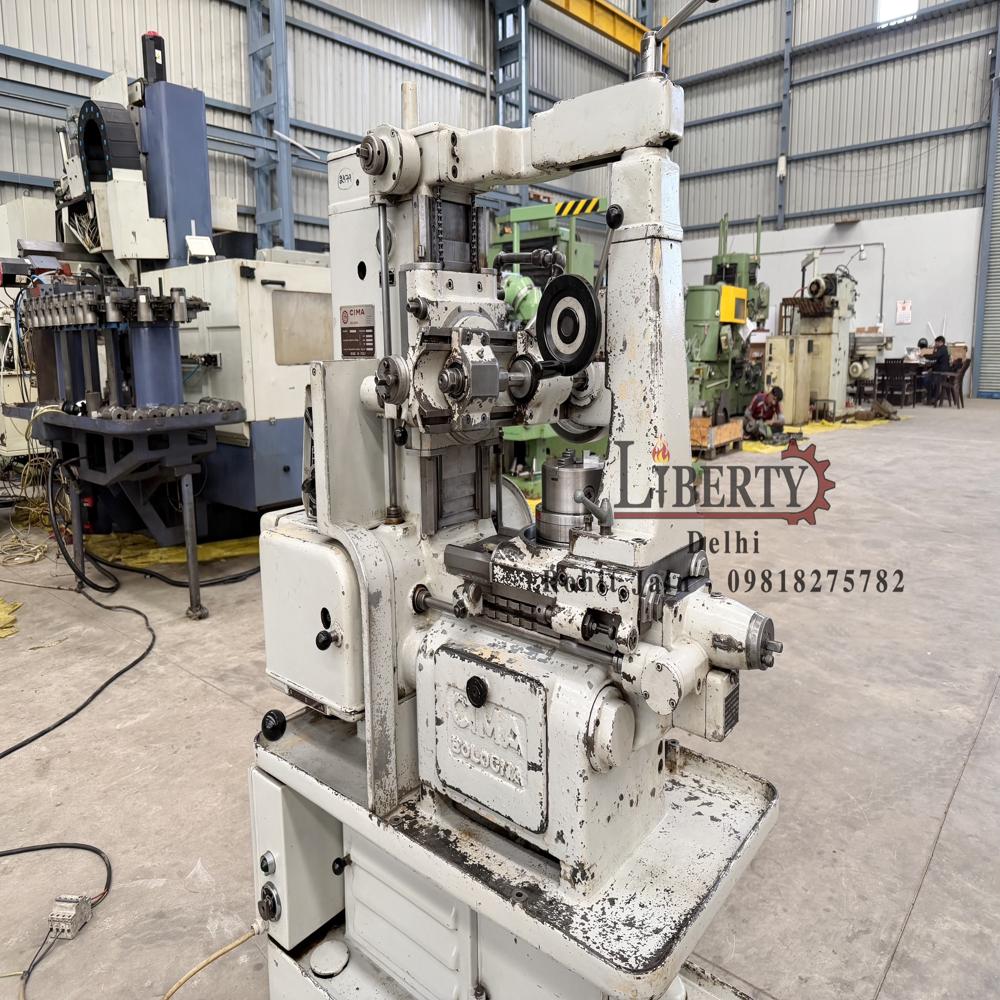
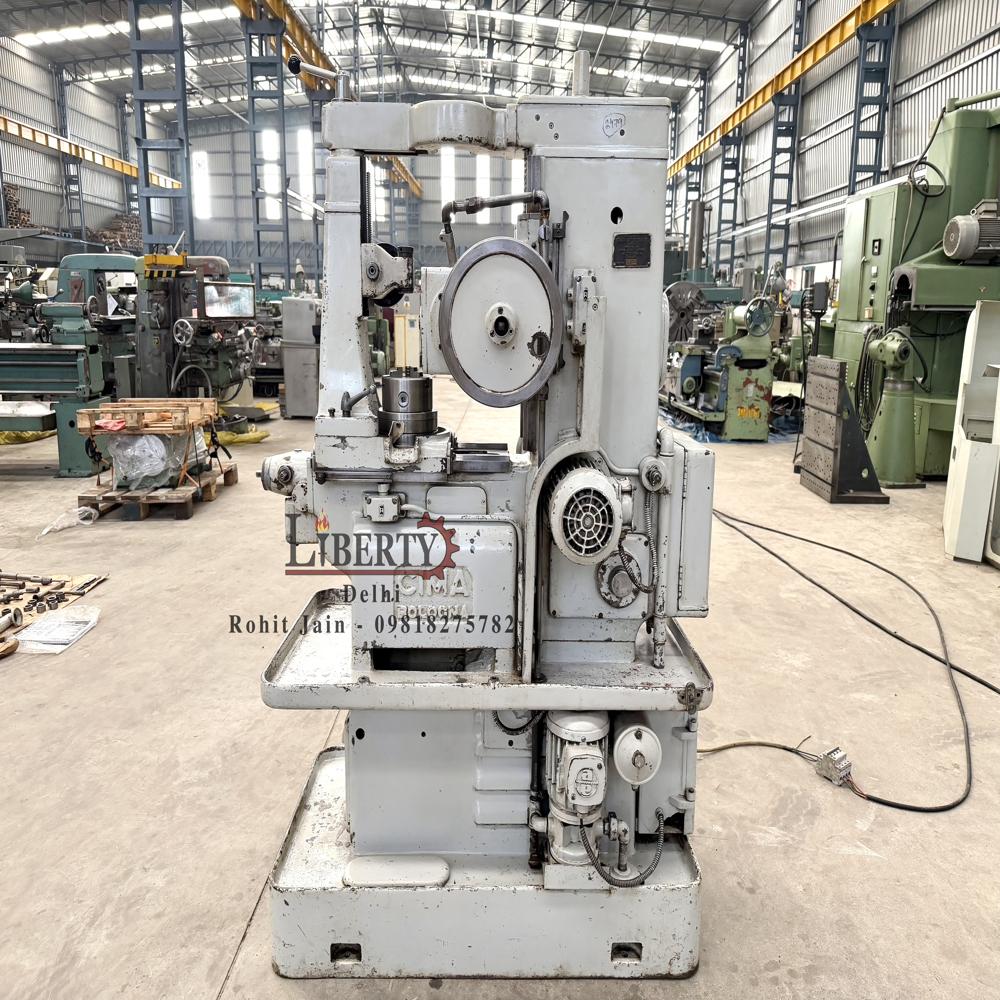
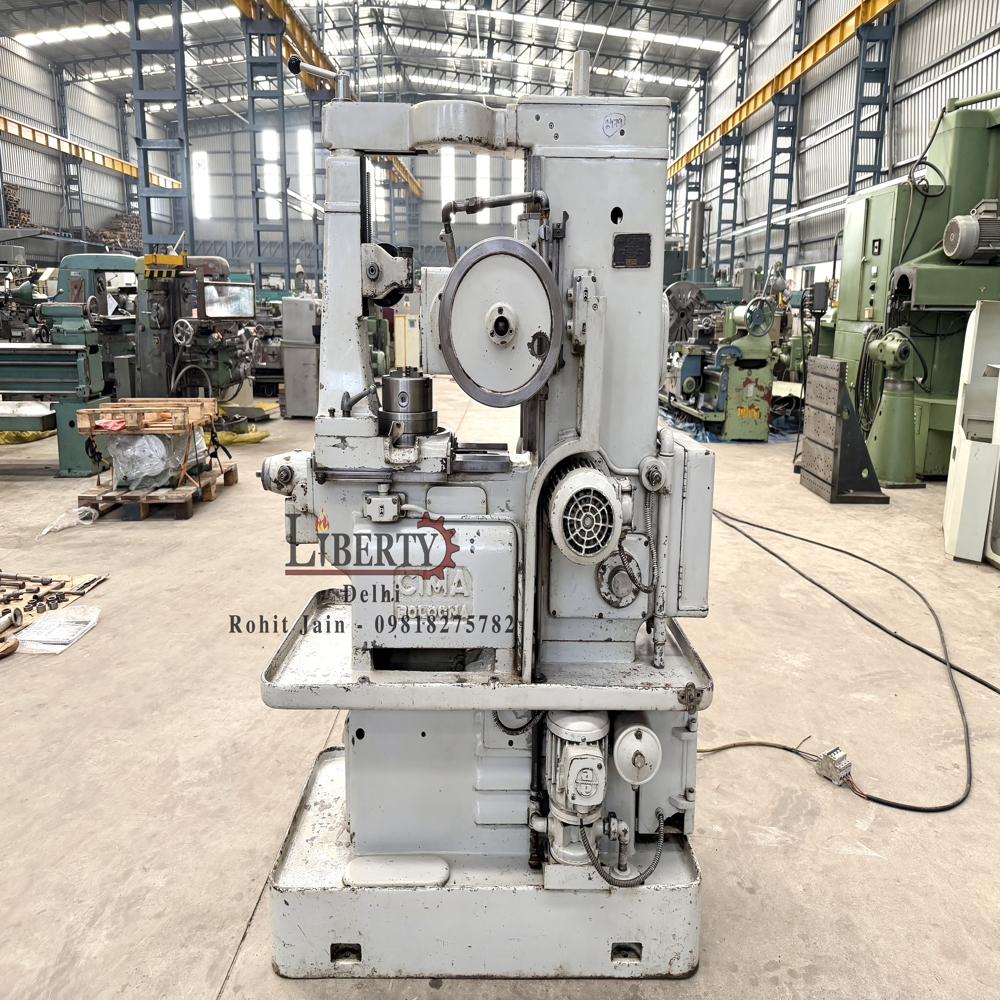
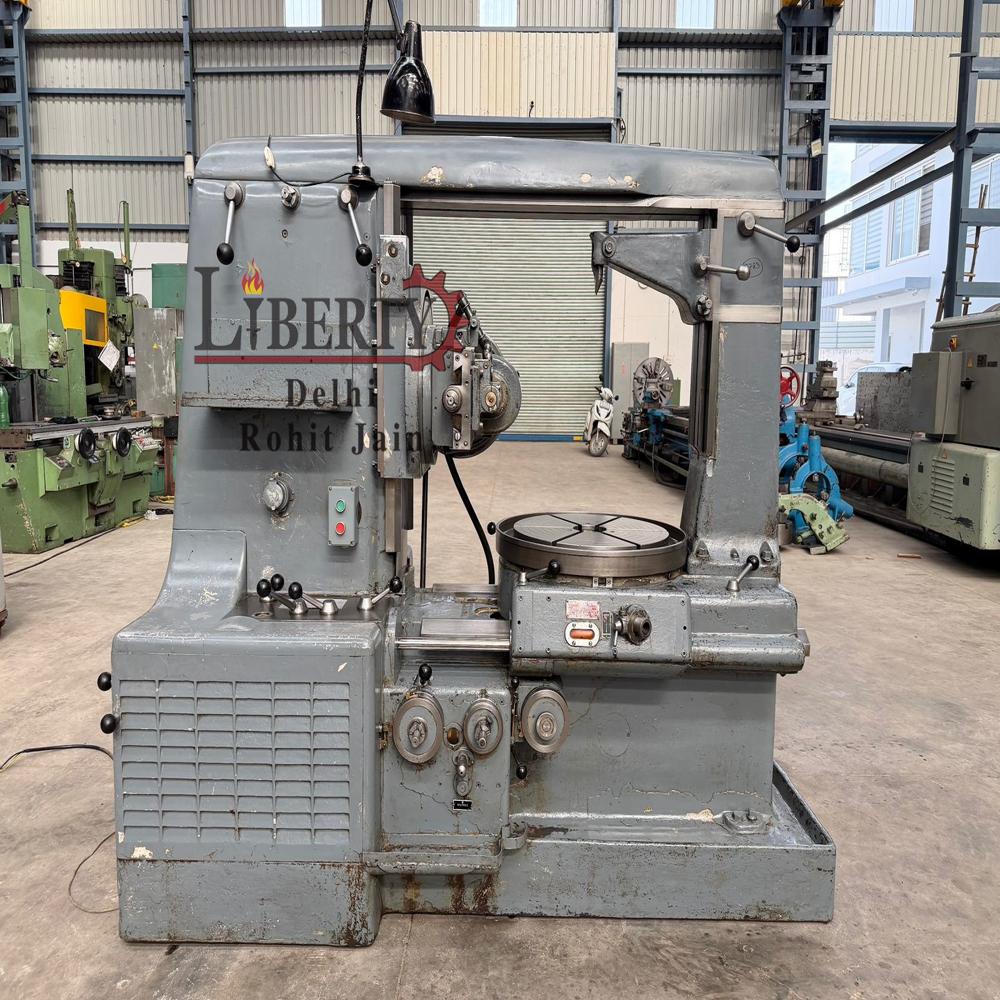
About CIMA Italy P-3 Gear Hobbing Machine
Make - Cima (Italy)
Model - P3
Max. Module - 3 Modules
Max. Gear Diameter - 155 mm (with Tail-Stock)
Vertical Travel of Hobbing Head - 220 mm
Max. Hob Cutter Diameter - 80 mm
Table Diameter - 150 mm
Max. Height between Table Top & Center - 400 mm
- Motorised Rapid & Feed Travels on Vertical, Longitudinal (Table) & Tangential (Hob Shifting).
- With Change Gears, Mandrels, Arbours, Covers & other accessories etc.
- Operating Manual of the Machine is available.
- Machine is in excellent working condition.
Video of the Machine -
Precision Gear Hobbing for Demanding ApplicationsThe CIMA P-3 Gear Hobbing Machine from Italy is designed for precise gear manufacturing, perfectly accommodating gears up to 155 mm in diameter and 3 module. With a blend of robust mechanical controls and advanced motorised travels, it delivers both quality and efficiency. Ideal for varied gear-cutting operations, this machine suits both batch and continuous production environments, ensuring every gear meets exacting standards.
Enhanced Productivity through Motorised FeaturesMotorised rapid and feed travels on the vertical, longitudinal, and tangential axes allow the operator to set up and cut gears swiftly and accurately on the CIMA P-3. These features minimize manual intervention, reduce cycle times, and result in greater productivity without compromising finish or precision. This setup is especially advantageous for operations that demand both speed and consistency in gear hobbing.
FAQ's of CIMA Italy P-3 Gear Hobbing Machine:
Q: How does the CIMA Italy P-3 Gear Hobbing Machine improve productivity in gear manufacturing?
A: The P-3 features motorised rapid and feed travels on vertical, longitudinal, and tangential (hob shifting) axes. These motorised movements allow for swift gear cutting and easy setup adjustments, reducing manual intervention for the operator and significantly increasing overall throughput and efficiency.
Q: What is the maximum gear size and module the P-3 can handle?
A: This machine can cut gears up to a maximum diameter of 155 mm when using the tail-stock, and it supports gear modules up to 3. This makes it suitable for producing a wide range of industrial gears within these specifications.
Q: When is a mechanical type gear hobbing machine preferred over a CNC model?
A: A mechanical type gear hobbing machine like the CIMA P-3 is preferred when robust reliability, straightforward operation, and lower capital investment are priorities. It's ideal for settings where manual adjustments and mechanical controls suffice, and high volumes of repetitious work are not required.
Q: Where is the CIMA P-3 primarily used, and who benefits most from this machine?
A: The P-3 is used in gear manufacturing facilities, workshops, and production lines worldwide, especially in settings requiring precision gear hobbing. Exporters, importers, manufacturers, suppliers, and traders in India and beyond benefit from its reliability and consistent performance.
Q: What is the process for operating this gear hobbing machine?
A: Operation involves manually setting up the gear blank and hob, then utilizing the motorised rapid and feed travel features for vertical, longitudinal, and tangential positioning. The mechanical controls allow for precise adjustments, while the machine handles the gear cutting and hob shifting processes.
Q: How does the machine ensure precision and repeatability during gear cutting?
A: Consistent precision is achieved through the combination of robust CIMA mechanics and motorised travels on key axes. These features enable accurate control of positioning and feed rates, ensuring each gear is manufactured to exacting tolerances time after time.
Q: What are the main benefits of using the CIMA P-3 for gear hobbing operations?
A: Key benefits include enhanced productivity, ease of operation through motorised movements, adaptability for various gear types within its capacity, and reliable performance in excellent working condition. These advantages contribute to efficient, cost-effective gear manufacturing.









 Send Inquiry

 Send Inquiry
 Send Inquiry
 Send SMS


