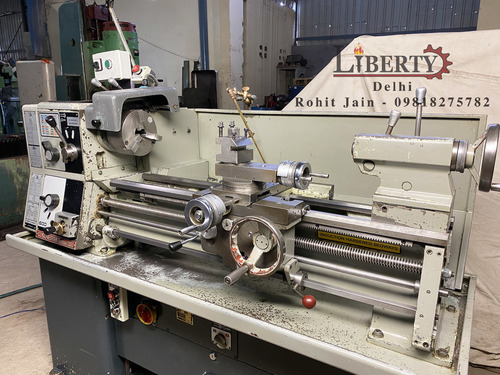
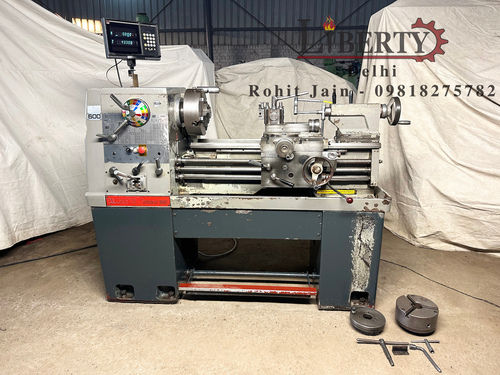
About Colchester Student 2500 Precision Lathe Machine
Make - Colchester (England)
Model - Student 2500
Center Height - 165 mm
Max. Length of Job - 650 mm
Max. Job Diameter over Bed - 330 mm
Max. Job Diameter over Cross-Slide - 210 mm
4-Jaw Chuck Diameter - 255 mm
3-Jaw Chuck Diameter - 165 mm
Spindle Speeds - 40 rpm to 2500 rpm
Bed Width - 205 mm
Spindle Bore - 40 mm
- Machine is in excellent working condition.
Video of The Machine -
https://youtu.be/xl1BrbX0nQ8
Engineered for Precision and DurabilityBuilt with high-grade cast iron, the Colchester Student 2500 delivers robust construction and long-term reliability. Its bed width of 187 mm and sturdy frame ensure minimal vibration, fostering precise turning and threading. The lathe is designed to handle cutting thicknesses up to 25 mm, making it suitable for various materials and applications.
Flexible Machining CapabilitiesWith a spindle bore of 40 mm, taper in spindle nose No. 6 Morse, and a standard 200 mm chuck size, this lathe accommodates diverse workpiece sizes. The thread range covers both metric (0.2 - 14 mm) and imperial (112 - 2 tpi) threads, enabling versatile operations for students and professionals alike.
Efficient and User-Friendly OperationManual controls and a 4-way tool post make tool changes straightforward. The tailstock quill travels up to 150 mm, supporting deep drilling or long component machining. Fitted coolant systems and noise levels below 80 dB contribute to a safe and comfortable workspace.
FAQ's of Colchester Student 2500 Precision Lathe Machine:
Q: How do I operate the Colchester Student 2500 Lathe's manual controls?
A: Operating this lathe involves using its manual levers and dials to adjust spindle speeds, feed rates, and tool post functions. The control system is straightforward, allowing easy selection of 18 spindle speeds for varied cutting and threading tasks.
Q: What types of threads can I cut with this lathe machine?
A: The Colchester Student 2500 supports a wide thread range: metric threads from 0.2 to 14 mm and imperial threads from 112 to 2 tpi. This versatility allows users to work with components requiring different thread specifications.
Q: When should the coolant system be used during machining?
A: The fitted coolant system should be used during prolonged cutting, threading, or heavy-duty applications to manage heat, protect tooling, and ensure a smooth surface finish on the workpiece.
Q: Where can this lathe machine be installed?
A: The machine requires a floor space of 2100 mm x 900 mm and runs on 415 V power, making it suitable for workshops, educational institutions, and manufacturing facilities with standard industrial setups.
Q: What is the process for changing tools on the 4-way tool post?
A: To change tools, loosen the locking bolt on the 4-way tool post, rotate to your desired tool position, and tighten the bolt. This design allows rapid tool changes and improves workflow efficiency.
Q: How does the high-grade cast iron construction benefit users?
A: The use of high-grade cast iron significantly enhances the lathe's stability, minimizes vibrations, and contributes to precise, high-quality workmanship over extended periods of use.
Q: What maintenance procedures are recommended for reliable performance?
A: Routine maintenance includes regular lubrication of moving parts, cleaning of swarf and debris, checking alignment, and inspecting electrical components to ensure the machine maintains its accuracy and robust performance.









 Send Inquiry

 Send Inquiry
 Send Inquiry
 Send SMS


