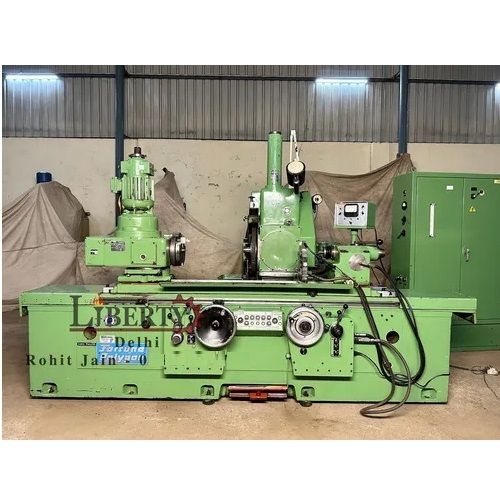
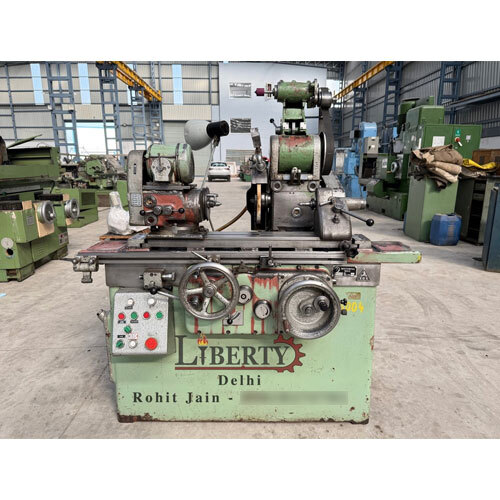
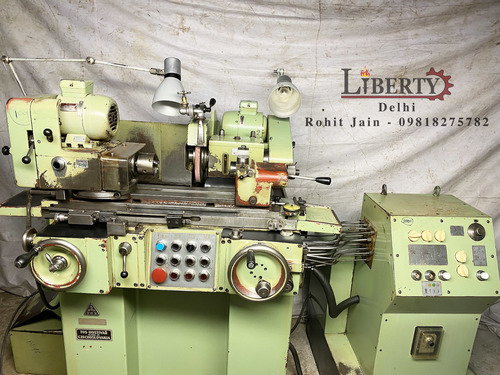
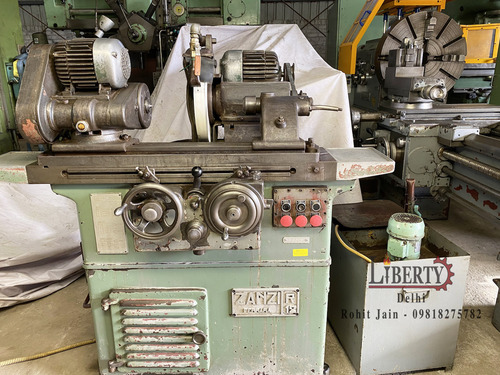
About Fortuna Germany Polygon and Cylindrical Grinder
Make - Fortuna (Germany)
Center Height - 240 mm
Max. Job Diameter - 475 mm
Max. Length of Job - 1000 mm
Grinding Wheel Diameter - 500 mm
Grinding Wheel Width - 50 mm
Table Rotation - 9 degree to -6 degree
- Special Machine for Cylindrical and Polygon shaped shafts.
- Features like Auto-Cut, Auto-Compensation, Plunge Grinding etc.
- Features like Delay, Hydraulic Tail-Stock, etc.
- Equipped with MARPOSS In-process Measure Device.
- Complete with Coolant Filtration Unit.
- Machine is in excellent working condition.
Video of The Machine -
https://youtu.be/TzTEtoOtH9k
Precision Grinding for Industrial DemandsAchieve superior accuracy with the Fortuna Germany Polygon and Cylindrical Grinder. Delivering grinding accuracy within 0.005 mm, this machine is perfect for manufacturers requiring both polygonal and cylindrical grinding. The high spindle speeds, robust frame, and versatile workholding ensure consistent results across varied batch sizes, making it essential for high-standard production environments.
Robust Construction and Ease of UseEngineered with a high-grade cast iron frame and quality steel components, this grinder withstands the rigors of daily industrial use. Its semi-automatic operations, ergonomic manual and hydraulic controls, and automatic lubrication system contribute to a streamlined user experience, optimizing both operator efficiency and machine longevity.
Versatile Application and CapacityWith the ability to handle workpieces up to 500 mm in length and 200 kg in weight, as well as grind internal and external surfaces, the Fortuna grinder adapts to a diverse range of machining tasks. Its heavy-duty coolant pump, variable-speed work headstock, and precise tailstock adjustment provide the flexibility needed in both specialized workshops and large-scale production floors.
FAQs of Fortuna Germany Polygon and Cylindrical Grinder:
Q: How does the integrated coolant system benefit the grinding process?
A: The robust coolant system maintains optimal grinding temperatures, reduces thermal distortion, prevents workpiece overheating, and removes debris from the grinding area, thereby enhancing surface finish and ensuring prolonged tool life.
Q: What types of parts can be machined on this grinder?
A: The machine is engineered for precision grinding of both polygonal and cylindrical workpieces, supporting diameters from 10 mm to 200 mm and lengths up to 500 mm. It is suitable for components requiring tight tolerances and exceptional finish.
Q: When should the centralized automatic lubrication system be used?
A: The automatic lubrication system operates continuously during machine use, minimizing the need for manual intervention. This setup guarantees consistent lubrication of moving parts, reducing wear and maintenance intervals.
Q: Where can this grinder be installed for optimal usage?
A: Due to its substantial weight and dimensions, the grinder is best installed in dedicated machine shops, manufacturing plants, or tool rooms with adequate space and suitable foundation, supporting industrial-grade 415 V, 50 Hz power supply.
Q: What is the process for adjusting workpiece speed and position?
A: The grinder features a variable-speed revolvable work headstock, allowing precise control of spindle speeds up to 1800 RPM. Table traverse can be managed either manually or through hydraulic feed depending on the complexity of the operation.
Q: How does the machine ensure high-precision results?
A: Precision is achieved through rigid construction, a precision-ground spindle, adjustable tailstock, and the use of high-quality grinding wheels. These factors together ensure that dimensional accuracy and surface finish consistently meet demanding specifications.
Q: What are the chief benefits of using this heavy-duty grinder in production?
A: Key benefits include robust performance, adaptability for various part sizes and shapes, high-precision results within 0.005 mm accuracy, extended machine lifespan due to advanced lubrication and cooling systems, and reduced operator fatigue through semi-automatic, ergonomic controls.








 Send Inquiry

 Send Inquiry
 Send Inquiry
 Send SMS


