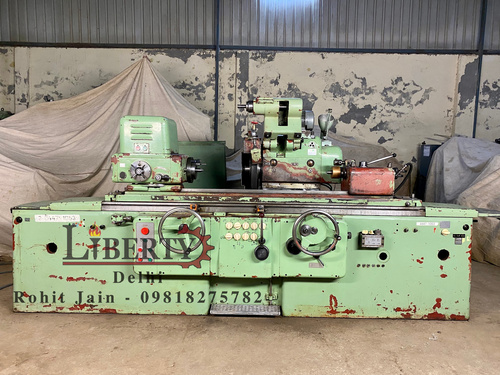
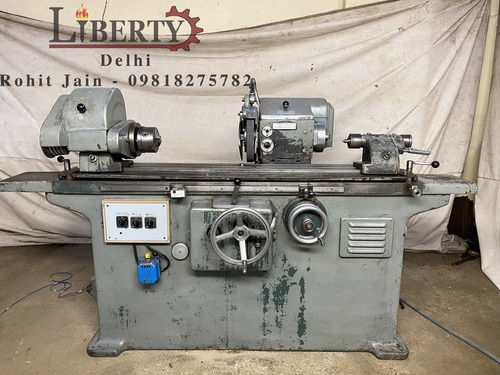
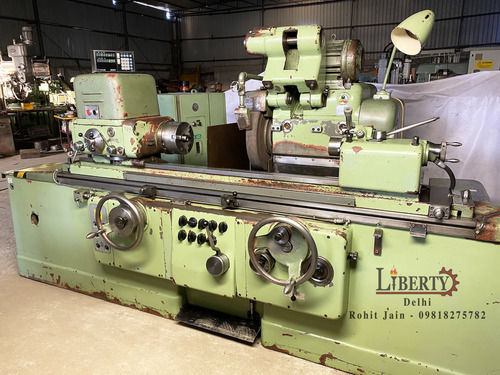
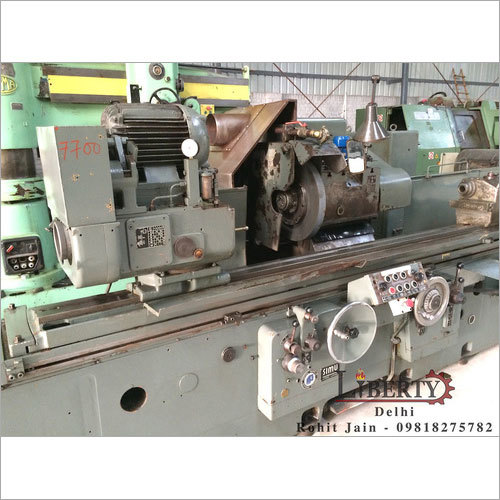
About TOS BUA 31 x 1000 mm Universal Cylindrical Grinder
Make - TOS-Hostivar (Czech Republic)
Model - BUA 31/1000
Center Height - 160 mm
Max. Length of Job - 1000 mm
Max. Diameter of Job - 320 mm
Grinding Wheel Size - Diameter 500 mm x 90 mm Width
Work-Head Speeds - 15 rpm to 375 rpm
Least Count - 1 Micron (0.001 mm)
- Equipped with Internal Grinding Attachment.
- Features like Auto-Cut, Auto-Compensation, Plunge Grinding etc.
- Features like Delay, Auto-Slow, Auto Wheel Retraction etc.
- Equipped with a Hydraulic Tail-Stock.
- Complete with Magnetic Coolant Filtration Unit, Coolant Tank & Pump.
- Machine is in excellent working condition.
Video of The Machine -
https://youtu.be/iu73crBrX_I
Engineered for Precision and FlexibilityThe TOS BUA 31 x 1000 mm Universal Cylindrical Grinder is designed for both external and internal grinding of heavy-duty components, offering high accuracy in shaping cylindrical and conical surfaces. Its manual, semi-automatic control and variable spindle speeds allow operators to adapt the grinding process to diverse production requirements.
Robust Construction and Reliable PerformanceConstructed from cast iron and steel, this grinder features a center height of 180 mm and supports workpieces up to 150 kg. The 4.0 kW main motor ensures stable operation while the centralized automatic lubrication system increases longevity and reduces maintenance needs. Designed for industrial use, it handles rigorous demands efficiently.
Versatility with Advanced FeaturesThis model provides a maximum grinding length of 1000 mm and a swing over bed of 320 mm, accommodating a wide range of workpiece sizes. The optional internal grinding attachment and high-speed spindle (up to 12,000 RPM) broaden its capabilities. Safety and operation are enhanced with a standard coolant system and ergonomic controls.
FAQs of TOS BUA 31 x 1000 mm Universal Cylindrical Grinder:
Q: How does the TOS BUA 31 x 1000 mm cylindrical grinder ensure precision in grinding operations?
A: The machine is built with a rigid cast iron and steel structure, offering high stability during grinding. Its variable speed control, centralized automatic lubrication, and precision spindle system contribute to consistent and accurate material removal, making it suitable for high-precision requirements.
Q: What types of workpieces can be processed with this grinder?
A: This universal cylindrical grinder accommodates workpieces made of cast iron or steel, with diameters ranging from 8 mm up to 320 mm and lengths up to 1000 mm. It is designed for grinding both cylindrical and conical surfaces across various industries.
Q: When should the internal grinding attachment be used?
A: The optional internal grinding attachment should be used when internal surfaces require precision finishing, particularly in components with tight tolerance requirements. It is ideal when internal diameters demand high rotational speeds, as the spindle can reach up to 12,000 RPM.
Q: Where is the TOS BUA 31 x 1000 mm cylindrical grinder typically utilized?
A: This machine is commonly found in industrial workshops, manufacturing plants, and tool rooms requiring precision grinding for heavy-duty and high-accuracy applications, particularly in export, manufacturing, and supply sectors.
Q: What is the process for setting up workpieces between centers?
A: To set up a workpiece, secure it between the headstock and tailstock (with a center height of 180 mm). Adjust the tailstock quill (50 mm travel) for positioning and ensure firm clamping. The machines workhead uses a MT4 taper for stable mounting, supporting workpieces up to 150 kg.
Q: How does the coolant system benefit grinding operations?
A: The built-in coolant system efficiently dissipates heat generated during grinding, minimizing thermal expansion and reducing the risk of burns or material damage. This enhances both surface finish quality and machine longevity.
Q: What are the advantages of choosing this semi-automatic, manual-control grinder?
A: The TOS BUA 31 x 1000 mm combines flexibility with robust performance. Semi-automatic features streamline repetitive tasks, while manual controls allow operators to adapt to specific workpiece requirements, making the machine suitable for both standard and customized precision grinding jobs.








 Send Inquiry

 Send Inquiry
 Send Inquiry
 Send SMS


